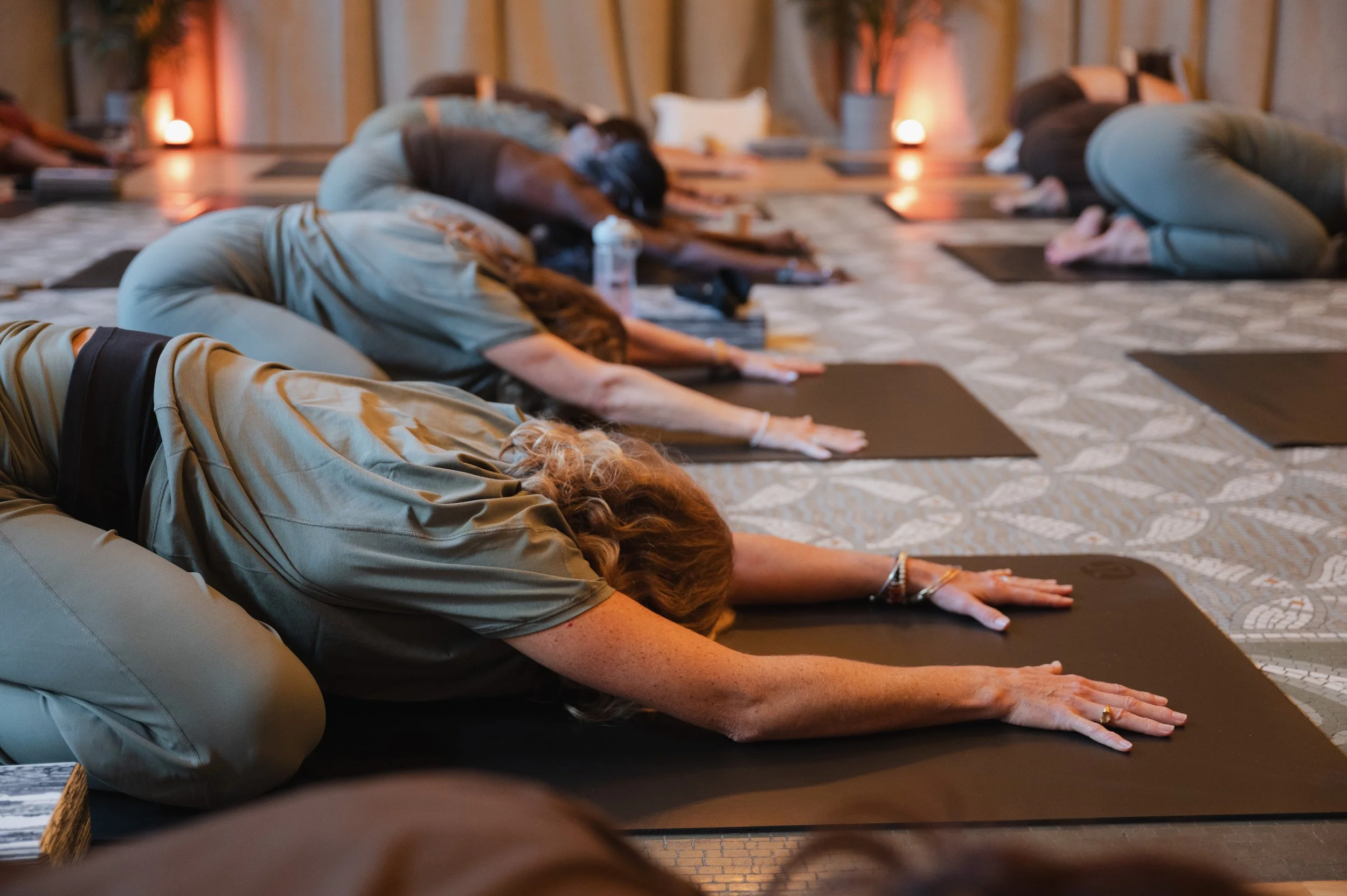
The Cooldown:
A Recovery Class
Myofascial release, stretch and nervous system care.
COOLDOWN
How you train matters. And so does how you recover.
Whether you run, lift, Pilates, HYROX, cycle, hike or sit at a desk all week (or life has just been asking a lot of your body lately), The Cooldown is where we slow things down and give recovery the time most of us never do.
Cooling down doesn’t get enough love.
Always reserved for the end of class or a workout. And often cut for time. But your body adapts to what you repeatedly ask of it. If all you ever ask for is effort, effort is what it gets good at.
Recovery is a skill too. The cooldown is an intentional practice that you can add to your training schedule like you do your lifts and runs.
The Session: 3 parts. 1 practice.
Myofascial release Theraputic trigger point tools and slow, sustained pressure on fascia, the connective tissue that wraps and links every muscle. You'll find tension you didn't know you were carrying, and learn how to work with it on your own.
Stretch and mobility Long, supported holds for tight muscles across the whole body including hips, glutes, hamstrings, calves, shoulders and upper back, whether they got that way on a trail or in an office chair.
Nervous system care Training (and life!) keeps your system switched on. Here we practice shifting down using breath and stillness to bring your mind and your body to a calmer state.
The Art & Science
Why we roll
Fascia is the connective tissue that wraps and links your whole body, and it's dense with nerve endings. Some researchers consider it one of your richest sensory organs. Slow ball work speaks directly to that sensory web, and most of what you feel travels through the nervous system.*
A clearer inner map
Bring feeling back to the places that tend to go quiet... the feet, the back ribs, the sacrum, the space between the shoulder blades.
More room to move
Pressure changes how closely your body guards an area and how much stretch it's willing to allow.
Somewhere to settle
Broad, steady pressure gives your body something to rest into, with a felt sense of support from below.
Contact on your terms
You choose where, how much and for how long. Touch, with you fully in charge.
Practice in pacing
More pressure or less? Stay or shift? Every roll builds your capacity to notice what you feel and choose how to respond.
The ball gives your body information. Somatic awareness is how you learn to read it.

WHAT WE’LL EXPLORE
-
Understanding what the nervous system is, what regulation actually means, and why this knowledge changes everything.
-
Discover how your nervous system shapes identity, perception, safety, relationships, and everyday experience.
-
We'll explore the essential framework that supports regulation in the context of your life, helping you understand the many ways you can influence and respond to your nervous system and become more in tune with your own needs.
-
We’ll learn how to bridge action and self-compassion to help create transformative self-care rituals in your daily life.
More Session Details
Format
In person (2 hours) | Virtual coming soon
Cadence
Monthly + pop-ups
Delivery
experiential practice, small group, movement and meditation, breath work
Cohort
capped at 8
Expect
The experience is designed to be spacious and not overwhelm you. There is optional between session self-work, but all bonus material will be available to you to keep and revisit any time you need in the future.